1. The Central Nude Figure
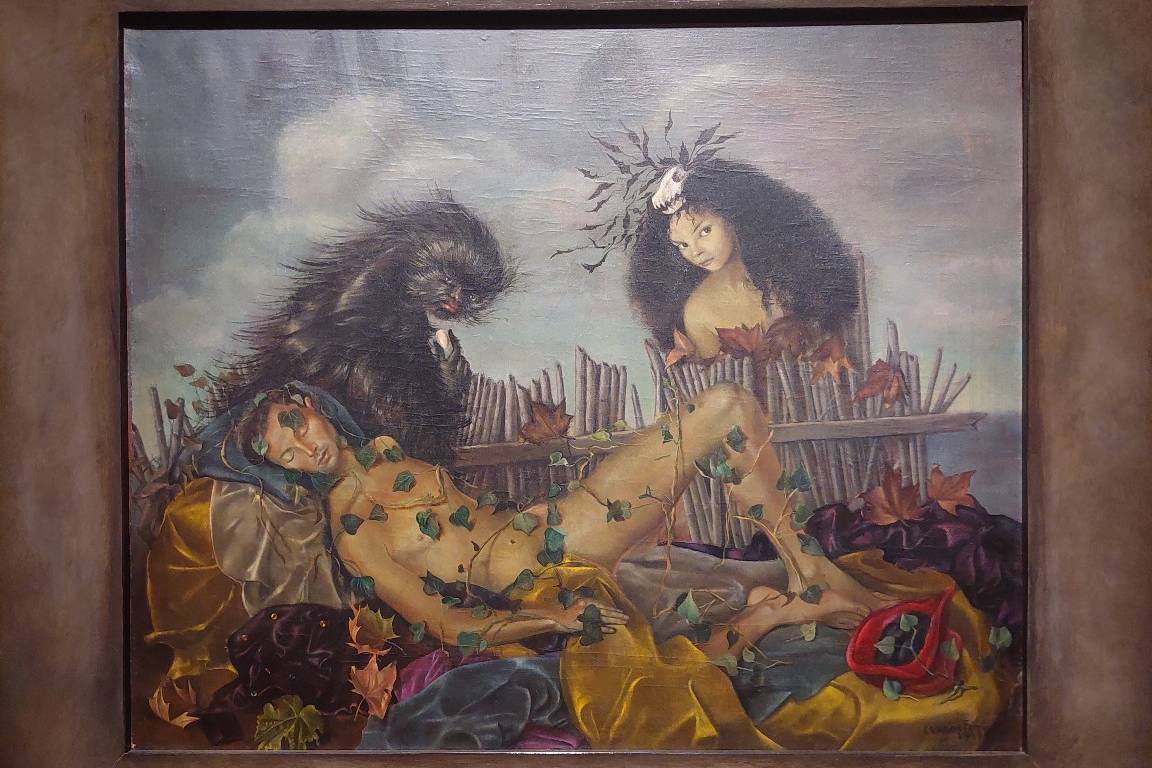
At the center lies a pale, androgynous body wrapped in vines and leaves, reclining amid rich drapery in deep golds and purples.
- Sensuality and Vulnerability: The figure is exposed and seemingly asleep or entranced — caught in a moment between pleasure and peril.
- Nature’s Embrace or Ensnarement: The ivy growing over the body suggests entanglement — a merging with or conquest by nature, magic, or feminine forces. It also hints at loss of agency or transformation.
- Gender Ambiguity: The body is smooth and stylized, blurring gender binaries — a recurring theme in Fini’s work that challenges conventional eroticism and power dynamics.
2. The Two “Stryges”
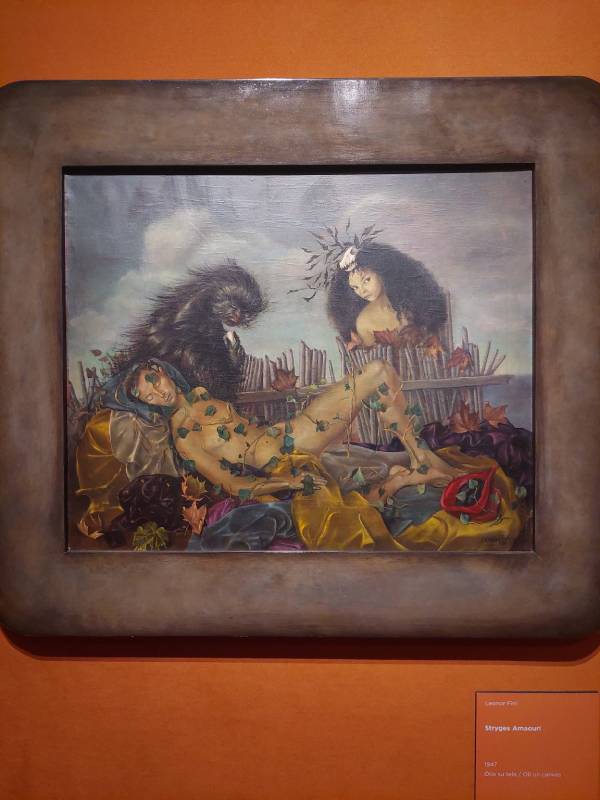
The two looming figures, with black, unruly hair and wild animal-like features, gaze down at the reclining figure.
- Predatory Yet Maternal: Their presence suggests a mix of menace and fascination. They may be seductresses, devourers, or protectors — or all three.
- Hair as Power: Their massive, untamed hair gives them an almost mythic aura — witchy, feral, elemental.
- Mask-Like Faces: Their expressions are strange and unreadable — they don’t seem purely human, adding to the sense of supernatural threat.
3. Setting and Symbolism
- The Fence or Barricade in the background is brittle and crooked — possibly symbolizing a liminal space between nature and civilization, life and death, self and other.
- Autumn Leaves scattered throughout reinforce a theme of decay, passage, and transformation — the end of a cycle.
- Red Hat and Drapery evoke sensuality, eroticism, and danger — typical markers of the femme fatale or seduction.
Themes in the Painting
- Eroticism and Power: Fini often reversed traditional gender roles in her work. Here, instead of a passive woman and dominant male gaze, we see predatory feminine forces surrounding a passive, possibly feminized figure.
- The Supernatural Feminine: The Stryges represent forces beyond morality or social norms — linked to the moon, the night, and ancient mythologies of fear and desire.
- Ambiguity and Myth: The viewer is unsure whether the central figure is victim, willing participant, or undergoing some ritual transformation. That ambiguity is key to the painting’s unsettling power.
Conclusion
Stryges Amaouri is a potent allegory of erotic enchantment, surrender, and metamorphosis. In it, Leonor Fini explores the ancient archetype of the witch or siren — not as a villain, but as a symbol of feminine magic and agency. It’s a reversal of patriarchal myth: here, the stryges don’t embody evil, but freedom from norms, and the painting invites us into their world — where seduction is power, the boundaries of self dissolve, and transformation is inevitable.