
1. Composition and Setting
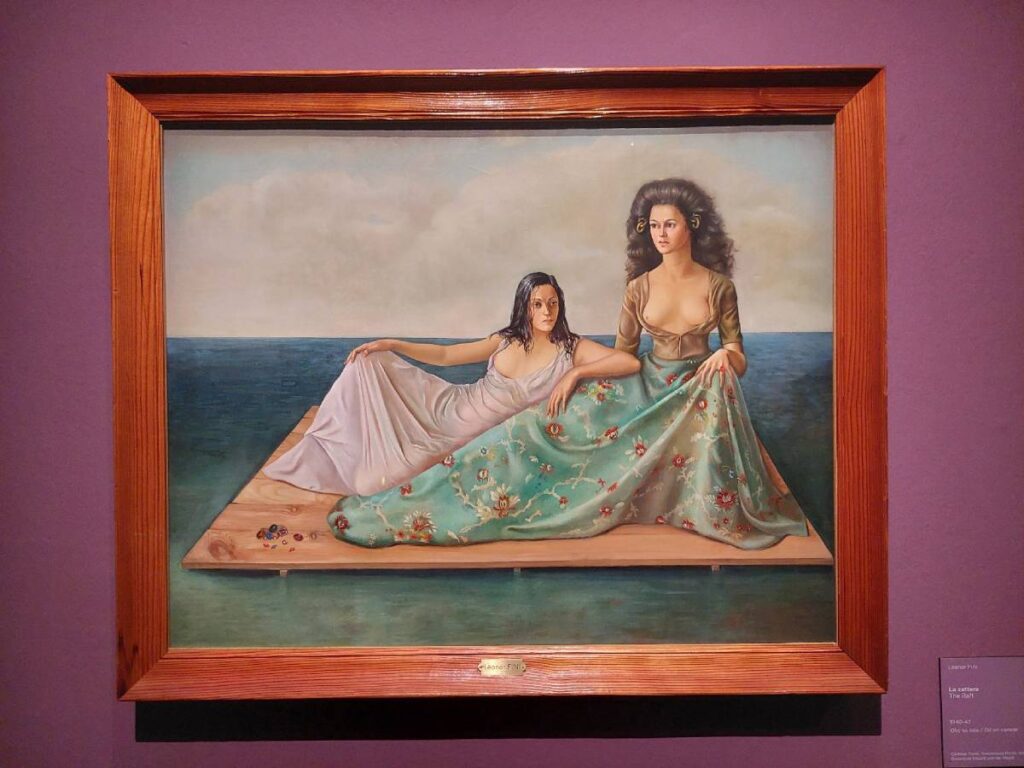
Two women sit on a delicate wooden raft floating in a vast, still ocean, isolated under a softly clouded sky. There is no land in sight, no obvious movement — only calm, eerie stillness.
This minimal seascape evokes:
- Exile and Drift: Painted during World War II (a time when Fini herself had to flee fascist-occupied France), the raft becomes a symbol of displacement, survival, and isolation.
- Timelessness: The quiet, suspended atmosphere gives the scene a timeless, dreamlike quality — a hallmark of Fini’s surrealist vision.
2. The Two Women
The figures are posed in a way reminiscent of classical or Renaissance portraiture — poised, dignified, self-aware. But they’re not passive.
- Doubles or Alter Egos? They might represent different aspects of the same woman: one wet-haired, relaxed, and passive; the other dry, composed, and upright — suggesting emotional duality, or the split between vulnerability and resilience.
- Companionship in Exile: Their closeness, yet individual presence, suggests female solidarity and the psychic intimacy between women navigating adversity.
Fini often celebrated the independent power and enigmatic interiority of women, and here she gives them dignity and complexity, even adrift in uncertain waters.

3. The Drapery and Fabric
- The ornate floral fabric draped around the women stands out vividly. It’s lush, decorative, and oddly out of place in this barren oceanic setting.
- This textile may represent:
- Memory or Culture: A remnant of beauty, civilization, or personal identity salvaged amid chaos.
- Sensuality and the Body: In contrast to the flat sea and wooden raft, the fabric adds texture, luxury, and femininity — a symbol of interior richness even in physical exile.
4. Jewels on the Raft
Scattered near the base of the raft are tiny jewels or trinkets — likely symbols of past lives, lost worlds, or precious fragments of self. They feel almost like offerings, or clues from a forgotten narrative.
5. Broader Themes
- Survival and Poise: Despite the fragile setting, the women are composed, dignified, and grounded — defying victimhood.
- Feminine Autonomy: Even in a surreal wilderness, Fini’s women command presence, thought, and strength.
- Inner Mythology: As in all her work, the scene feels like a personal myth — a symbolic portrait of psychological survival during crisis.
Conclusion
The Raft is not about a journey from one place to another. It’s about a state of being — suspended between past and future, danger and safety, vulnerability and poise. It’s an allegory of female endurance, identity, and intimacy set adrift in a turbulent, unknowable world — rendered with the calm, exacting beauty that makes Fini’s work so powerful and mysterious.
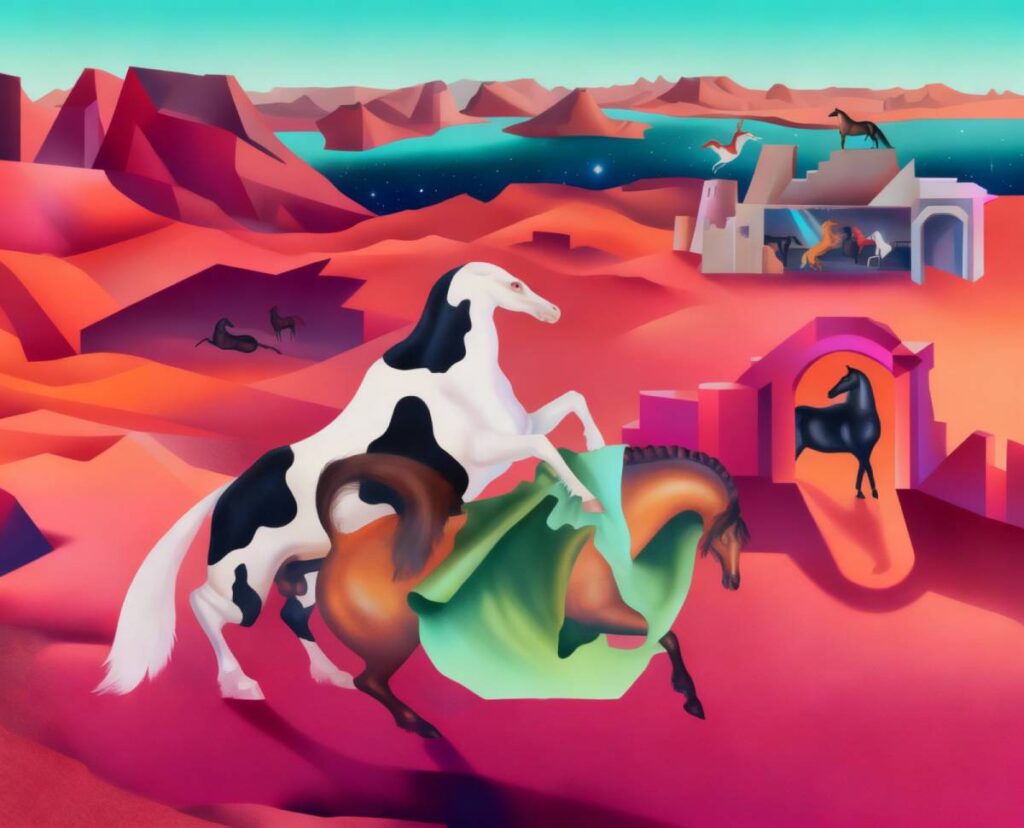
Images in this article are inspired by
Leonor Fini, “Le Radeau”, 1940-43. Oil on canvas, 73 x 92 cm. Cantone Ticino. Fondazione Monte Verità. Donation by Eduard von der Heydt ©Leonor Fini Estate, Paris