1. The Owl as a Companion
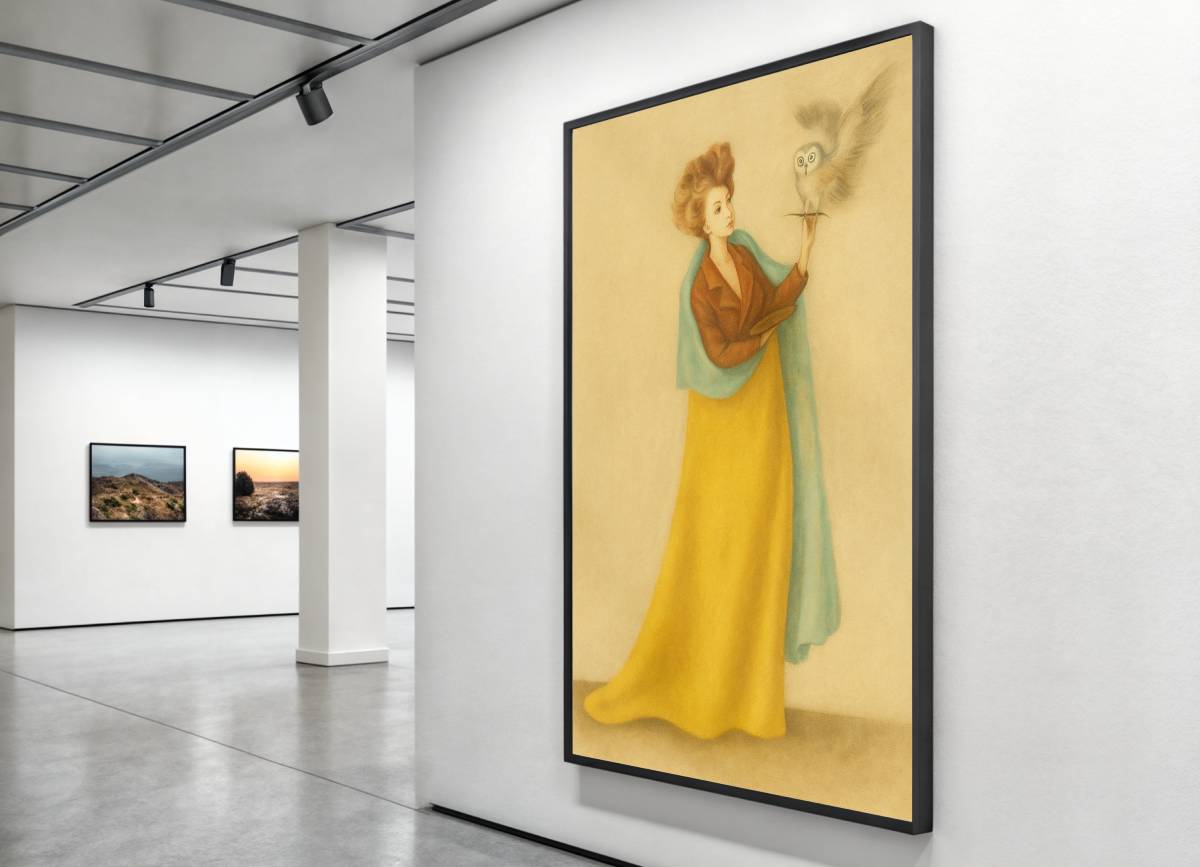
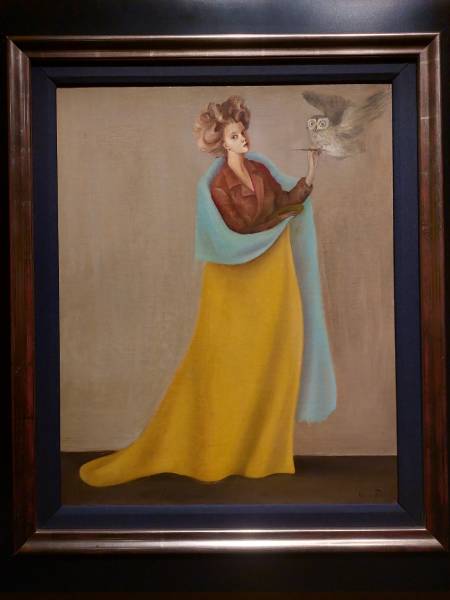
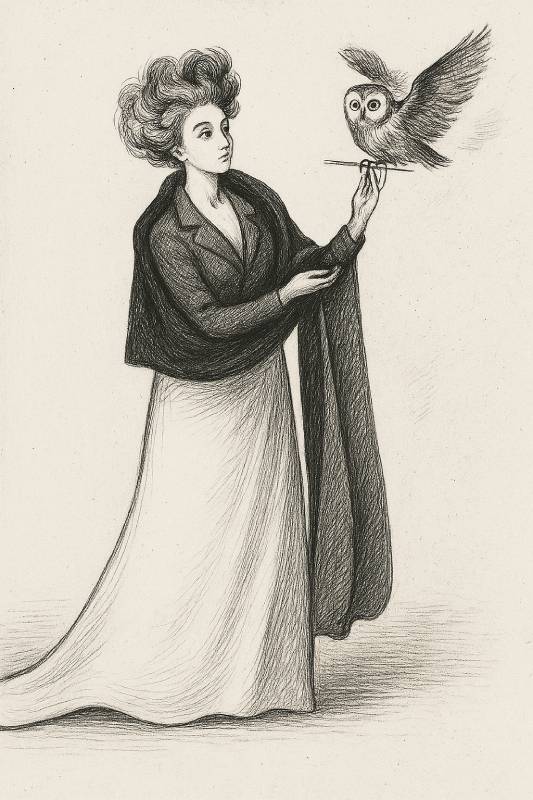
In this painting, the owl is perched lightly on her hand, suggesting a close, intentional bond rather than a symbolic backdrop. Unlike the more dynamic or aggressive owls in her later works, this one appears calm and watchful.
- Wisdom and Inner Sight: As in much of European symbology, the owl here likely represents intellectual and intuitive power, qualities Fini saw in herself and her feminine figures.
- Occult Knowledge and Autonomy: The owl’s serene yet alert expression echoes Fini’s interest in mysticism and the unseen. It’s as though the owl stands in for her own inner seer.
2. The Figure and Fashion
The portrayal of Fini herself is elegant, stylized, and carefully posed. She wears a striking combination of colors:
- Yellow Skirt: Symbolic of vitality, imagination, and independence.
- Blue Shawl: Often interpreted as spiritual, intuitive, or ethereal — linking her with divine feminine qualities.
- Structured Jacket: Suggests self-possession and command, possibly nodding to androgyny, a theme she would explore more openly later.
The clothing, especially the long, almost liquid shape of the skirt, evokes a theatrical or regal presence — not merely fashionable, but iconic.
3. Hair and Expression
Her voluminous, stylized hair and upward gaze lend her a mythical, nearly otherworldly appearance. She doesn’t smile or engage directly with the viewer but looks aside — perhaps in inner dialogue, or perhaps with the owl, indicating her connection to something beyond the ordinary world.
4. Flat Background
The simple, muted background draws focus entirely to Fini and the owl. It emphasizes the symbolic encounter over any real-world context, turning the portrait into a psychological or magical space rather than a traditional self-representation.
Overall Interpretation
This painting is not just a self-portrait, but a self-mythologizing image. Fini presents herself not as an artist at work or a woman in society, but as an enchantress, a figure of autonomy, knowledge, and mystery. The owl reinforces that identity: it’s not just a symbol, it’s a mirror of her internal world — perceptive, composed, and powerful.
It’s a bold declaration: “This is not just who I am — this is who I choose to be.”
Images in this article are inspired by
Leonor Fini, “Autoportrait à l’hibou”, 1936. Oil on canvas, 63,8 x 51,4 cm. Private Collection ©Leonor Fini Estate, Paris.